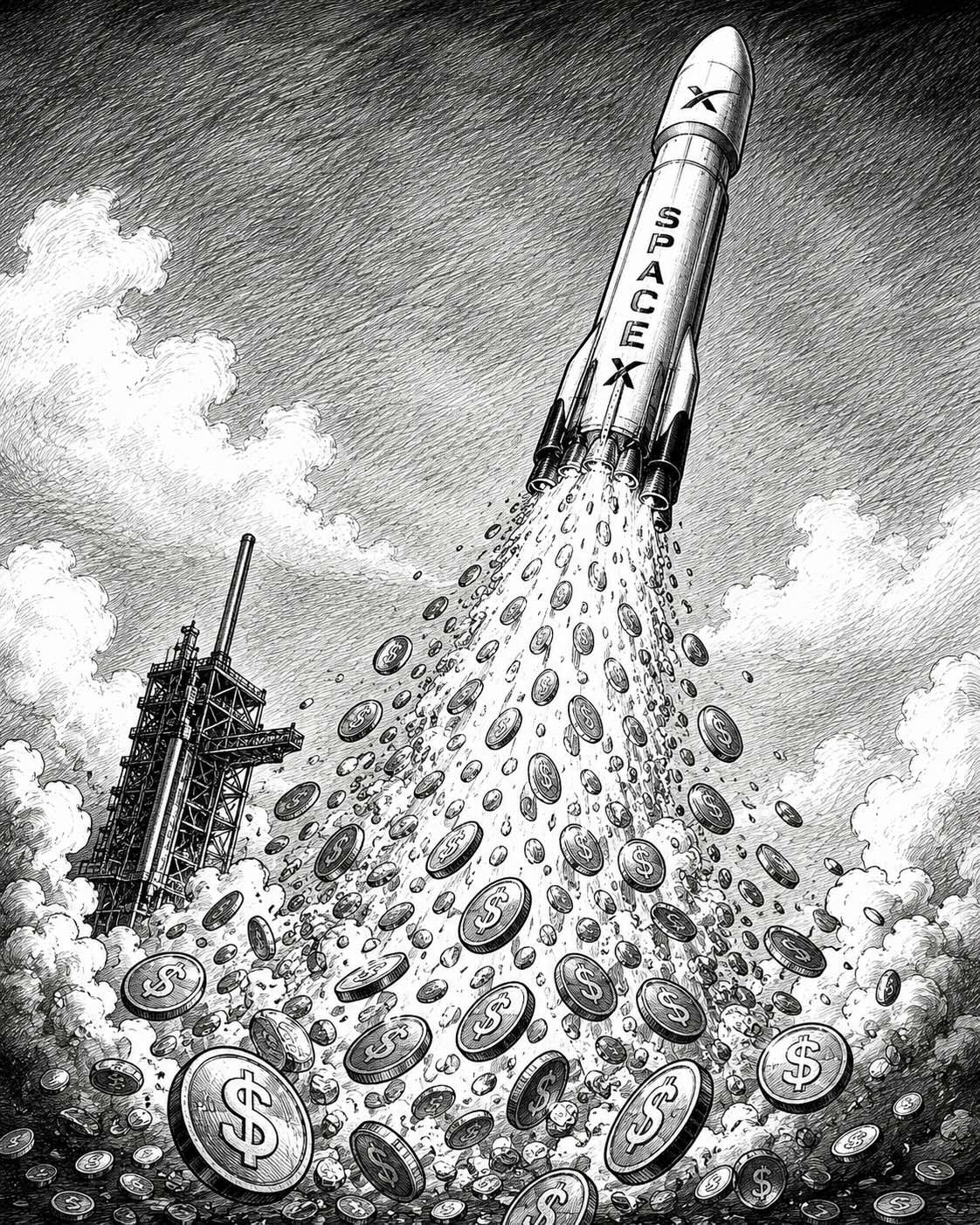
Is SpaceX worth $1.77 trillion?
The reported valuation of the SpaceX initial public offering has left many investors rubbing their eyes. At approximately $1.77 trillion, the rocket company founded by Elon Musk instantly ranks among the most valuable enterprises in history.
To grasp the scale of the figure, consider this: SpaceX is now worth more than the combined market value of ten of the most recognizable companies on Earth. Imagine adding together the following corporate giants. The total value of that collection would still fall short of SpaceX.
- Coca-Cola
- McDonald's
- Disney
- Nike
- IBM
- Ford
- General Motors
- Boeing
- FedEx
- Starbucks
That is a remarkable comparison. These are companies that helped define entire industries. Their products have been consumed, worn, watched, driven, flown, and delivered by billions of people over many decades. Some have histories stretching back more than a century. Yet a company founded in 2002 and best known for launching rockets could be worth more than all of them combined.
Does that make SpaceX a bad investment? Not necessarily.
Investors are not paying for what SpaceX is today. They are paying for what they believe it may become. The company has already transformed the economics of space launch, dominates the commercial launch market, and operates Starlink, a rapidly growing global communications network. Bulls argue that SpaceX is not merely a rocket company but the foundation of a future space economy that could eventually include satellite communications, lunar infrastructure, space manufacturing, and perhaps even settlement beyond Earth.
The question is whether those ambitions justify a valuation approaching two trillion dollars.
History offers reasons for caution. Investors have often overestimated how quickly revolutionary technologies would mature. Railways, automobiles, aviation, the internet, and artificial intelligence all experienced periods of exuberance followed by painful corrections. Great ideas do not always translate into great investments when expectations become too high.
For investors, the challenge is straightforward. If SpaceX becomes the dominant infrastructure company of the space age, today's valuation could eventually look reasonable. If growth slows, competition increases, or future opportunities prove more difficult than expected, the valuation may look excessive in hindsight.
The story of SpaceX may ultimately be less about rockets and more about a timeless investing question: how much should we pay today for a future that has not yet arrived?